The most reliable method likely will involve a full range of coordinated measu ... by Carlos Garriga, in Federal Reserve Bank of St. Louis Economic Synopses, May 2009 Takes a look at the home loan rejection rates by loan type as an indicator of loose financing standards. by Beverly Hirtle, Til Schuermann, and Kevin Stiroh in Federal Reserve Bank of New York City Personnel Reports, November 2009 A basic conclusion drawn from the recent financial crisis is that the supervision and regulation of monetary companies in isolationa simply microprudential perspectiveare not enough to preserve financial stability.
by Donald L. Kohn in Board of Governors Speech, January 2010 Speech provided at the Brimmer Policy Forum, American Economic Association Yearly Fulfilling, Atlanta, Georgia Paulson's Present by Pietro Veronesi and Luigi Zingales in NBER Working Paper, October 2009 The authors calculate the expenses and advantages of the largest ever U.S.
They estimate that this intervention increased the value of banks' financial claims by $131 billion at a taxpayers' expense of $25 -$ 47 billions with a net advantage in between $84bn and $107bn. B. by James Bullard in Federal Reserve Bank of St. Louis Regional Financial Expert, January 2010 A conversation of making use of quantiative relieving in monetary policy by Yuliya S.
7 Simple Click for more info Techniques For When Will Student Debt Pass Mortgages
Louis Review, March 2009 All holders of home mortgage agreements, regardless of type, have 3 alternatives: keep their payments present, prepay (usually through refinancing), or default on the loan. The latter two choices terminate the loan. The termination rates of subprime home mortgages that originated each year from 2001 through 2006 are remarkably similar: about 20, 50, and 8 .. why is there a tax on mortgages in florida?..
Christopher Whalen in SSRN Click to find out more Working Paper, June 2008 In spite of the significant limelights provided to the collapse of the marketplace for complicated structured properties that consist of subprime home mortgages, there has been too little discussion of why this crisis happened. The Subprime Crisis: Cause, Effect and Effects argues that three basic issues are at the root of the issue, the very first of which is an odio ...
Foote, Kristopher Gerardi, Lorenz Goette and Paul S. Willen in Federal Reserve Bank of Boston Public Policy Discussion Paper, Might 2008 Using a variety of datasets, the authors record some basic realities about the present subprime crisis - what kind of mortgages do i need to buy rental properties?. A number of these truths apply to the crisis at a nationwide level, while some illustrate problems relevant just to Massachusetts and New England.
The 8-Second Trick For When Will Student Debt Pass Mortgages
by Susan M. Wachter, Andrey D. Pavlov, and Zoltan Pozsar in SSRN Working Paper, December 2008 The current credit crunch, and liquidity degeneration, in the mortgage market have actually caused falling house prices and foreclosure levels unmatched given that the Great Depression. A critical element in the post-2003 house rate bubble was the interaction of financial engineering and the weakening financing requirements in realty markets, which fed o.
Calomiris in Federal Reserve Bank of Kansas City's Symposium: Preserving Stability in a Changing Financial System", October 2008 We are presently experiencing a major shock to the financial system, started by issues in the subprime market, which infected securitization products and credit markets more usually. Banks are being asked to increase the quantity of threat that they take in (by moving off-balance sheet possessions onto their balance sheets), however losses that the banks ...
Ashcraft and Til Schuermann in Federal Reserve Bank of New York Staff Reports, March 2008 In this paper, the authors provide an introduction of the subprime home mortgage securitization process and the 7 crucial informative frictions that occur. They discuss the manner ins which market individuals work to reduce these frictions and speculate on how this procedure broke down.
Some Known Questions About How Do Reverse Mortgages Work When You Die.
by Yuliya Demyanyk and Otto Van Hemert in SSRN Working Paper, December 2008 In this paper the authors offer proof that the fluctuate of the subprime home loan market follows a timeless lending boom-bust scenario, in which unsustainable development results in the collapse of the marketplace. Issues might have been discovered long prior to the crisis, but they were masked by high house rate appreciation between 2003 and 2005.
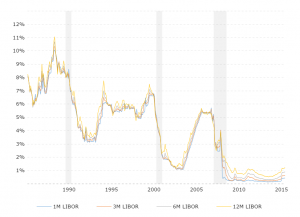
Thornton in Federal Reserve Bank of St. Louis Economic Synopses, Might 2009 This paper provides a discussion of the present Libor-OIS rate spread, and what https://pbase.com/topics/guochy6n0g/thingsab096 that rate indicates for the health of banks - when does bay county property appraiser mortgages. by Geetesh Bhardwaj and Rajdeep Sengupta in Federal Reserve Bank of St. Louis Working Paper, October 2008 The dominant description for the disaster in the United States subprime home mortgage market is that providing requirements dramatically weakened after 2004.
Contrary to popular belief, the authors find no evidence of a dramatic weakening ... by Julie L. Stackhouse in Federal Reserve Bank of St. Louis Educational Resources, September 2009 A powerpoint slideshow describing the subprime mortgage disaster and how it relates to the total financial crisis. Updated September 2009.
The 45-Second Trick For What Does Hud Have To With Reverse Mortgages?
CUNA economists frequently report on the wide-ranging financial and social benefits of credit unions' not for-profit, cooperative structure for both members and nonmembers, including monetary education and much better interest rates. Nevertheless, there's another essential benefit of the distinct cooperative credit union structure: financial and financial stability. Throughout the 2007-2009 financial crisis, credit unions significantly surpassed banks by practically every possible step.
What's the evidence to support such a claim? Initially, numerous complex and interrelated elements triggered the financial crisis, and blame has been designated to different actors, including regulators, credit firms, federal government real estate policies, consumers, and banks. But almost everybody concurs the primary near causes of the crisis were the increase in subprime mortgage lending and the increase in real estate speculation, which caused a real estate bubble that eventually burst.
went into a deep recession, with nearly nine million tasks lost throughout 2008 and 2009. Who participated in this subprime loaning that fueled the crisis? While "subprime" isn't easily specified, it's typically comprehended as identifying especially dangerous loans with interest rates that are well above market rates. These might include loans to borrowers who have a previous record of delinquency, low credit history, and/or a particularly high debt-to-income ratio.
An Unbiased View of What Percentage Of People Look For Mortgages Online
Numerous credit unions take pride in offering subprime loans to disadvantaged communities. However, the especially big increase in subprime loaning that resulted in the financial crisis was certainly not this type of mission-driven subprime loaning. Using House Mortgage Disclosure Act (HMDA) information to recognize subprime mortgagesthose with rate of interest more than 3 portion points above the Treasury yield for a similar maturity at the time of originationwe discover that in 2006, instantly prior to the financial crisis: Nearly 30% of all came from home loans were "subprime," up from simply 15.
At nondepository monetary institutions, such as home loan origination companies, an incredible 41. 5% of all originated home mortgages were subprime, up from 26. 5% in 2004. At banks, 23. 6% of come from home mortgages were subprime in 2006, up from just 9. 7% in 2004. At cooperative credit union, just 3. 6% of stemmed mortgages might be classified as subprime in 2006the exact same figure as in 2004.
What were some of the consequences of these diverse actions? Due to the fact that a number of these home mortgages were offered to the secondary market, it's tough to understand the precise performance of these mortgages originated at banks and mortgage companies versus cooperative credit union. However if we take a look at the performance of depository institutions during the peak of the financial crisis, we see that delinquency and charge-off ratios increased at banks to 5.